Honolulu,Hawaii Dog Registration Information
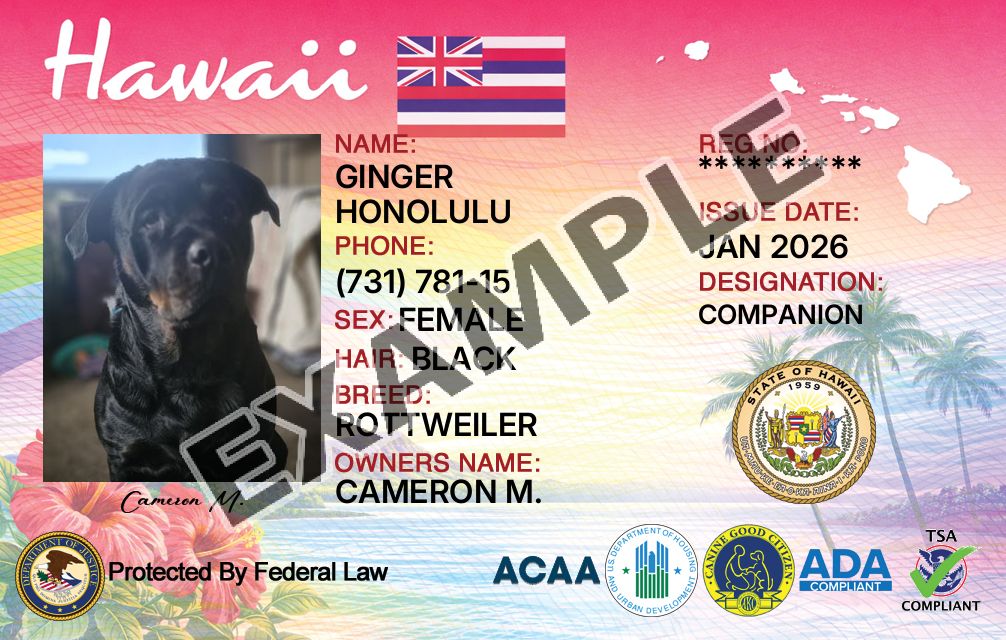
State Licensed, Service Dogs and Emotional Support Dogs in Hawaii
If you’re searching where do I register my dog in Honolulu, Hawaii for my service dog or emotional support dog, the key is to separate three different ideas that people often combine: (1) local pet identification and compliance (what many people call a “registration” or dog license in Honolulu, Hawaii), (2) public-access rights for service dogs, and (3) housing-related rules for emotional support animals (ESAs).
On Oʻahu, “registering” your dog typically means meeting the City & County of Honolulu’s pet identification requirements (notably microchipping) and keeping current vaccination records. Separately, service dog status is not created by a city license tag, certificate, vest, or online registry. And emotional support animals are not service animals under the ADA, but may receive housing-related accommodations when properly documented.
Where to Register or License Your Dog in Honolulu, Hawaii
Because pet rules are handled locally, the most reliable starting point is the City & County’s local animal services partner for Oʻahu and the State office that manages rabies quarantine for animals entering Hawaiʻi. Below are example official offices and agencies that are commonly relevant when residents ask where to register a dog in Honolulu, Hawaii or when they need help with local enforcement questions connected to animal control dog license Honolulu issues (such as lost pets, field services, or required identification).
Hawaiian Humane Society (Oʻahu) — Main Campus (Mōʻiliʻili)
State of Hawaiʻi Department of Agriculture & Biosecurity — Animal Quarantine Station (Dogs & Cats)
City & County of Honolulu — Satellite City Halls (General City Services)
Satellite City Halls are City & County facilities that handle many resident services. While Honolulu’s pet “licensing” model changed (microchip identification replacing a license tag), residents sometimes still contact City & County service counters for direction to the correct animal services channel. Specific addresses and direct phone lines vary by location and are not listed here—confirm the appropriate Satellite City Hall for your area.
Overview of Dog Licensing in Honolulu, Hawaii
What most people mean by “registering a dog” in Honolulu
In everyday language, “registering” can mean any official step that ties your dog to you—so the dog can be returned if lost and so the community can confirm public-health compliance. In Honolulu, that concept is closely linked to pet identification (microchipping) and vaccination records rather than a city-issued tag purchase.
Who enforces the key public-health rule (rabies quarantine) in Hawaiʻi
Hawaiʻi is unique because it operates a strict animal entry and quarantine system designed to keep rabies out of the state. If your question involves bringing a service dog, ESA, or pet dog into Hawaiʻi by air, the State’s Animal Quarantine Station is the definitive authority on what paperwork is required and whether your dog qualifies for direct airport release or a shorter quarantine program.
Why “service dog registration” can be a red flag
If you’re being told you must buy a certificate, pay an online registry, or obtain a special “service dog license” from a private website, be cautious. Service dog status is based on disability-related need and training (task work), not an online listing. For most daily needs in Honolulu, what you actually need is: (1) pet identification compliance (microchip), (2) up-to-date veterinary records, and (3) understanding what rights apply in public and in housing.
How Dog Licensing Works Locally in Honolulu, Hawaii
Local compliance: microchip identification and responsible ownership
Honolulu’s local approach focuses on making sure pets can be identified and returned quickly. Microchipping provides a permanent ID number that can be scanned by shelters and veterinary clinics. For practical purposes, your microchip number becomes the “registration number” many landlords, HOAs, and pet-friendly workplaces use to confirm your dog’s identity.
Rabies vaccination requirements: two contexts you should understand
Rabies requirements can be confusing in Hawaiʻi because people mix up (A) routine veterinary vaccination recommendations and local pet health rules, with (B) the State’s strict entry requirements for dogs arriving from the mainland or other locations. If you are moving to Honolulu or flying in with a dog (including a service dog), the State Animal Quarantine Station typically requires specific rabies documentation and timing, and may require lab testing and other steps well before travel dates.
For day-to-day Honolulu life, keep your dog’s vaccine records (including rabies, as advised/required) and your microchip information in an easy-to-share format. When in doubt—especially for travel—confirm requirements with the official State Animal Quarantine Station.
Animal control questions (lost dogs, stray pickups, cruelty concerns)
If your question is really about animal control—loose dogs, barking concerns, strays, bites, or cruelty reporting—your starting point on Oʻahu is typically the local animal services partner (Hawaiian Humane Society). While people search “animal control dog license Honolulu,” the resolution often involves identification (microchip), reunification procedures, and compliance guidance rather than purchasing a license tag.
What to keep in your “registration” file
- Microchip number and the registry account information showing you as the current owner
- Rabies certificate and other vaccination records from your veterinarian
- Photo of your dog (helpful for lost-pet reports)
- Proof of spay/neuter (sometimes requested by housing providers or local programs)
- Travel/quarantine documents if you are entering or re-entering Hawaiʻi by air
Service Dog Laws in Honolulu, Hawaii
Service dogs vs. pet registration: what changes (and what does not)
A service dog is not “made official” by a city dog license or a microchip record. Local pet identification rules still apply (for example, microchipping for identification), and a service dog should still be under control and well-behaved in public. The big difference is public access: service dogs are generally allowed in public places where pets are not, because they perform work or tasks for a person with a disability.
No official online registry is required
You do not need to buy a vest, ID card, certificate, or pay a private registry to have a legitimate service dog. Businesses commonly are limited in what they may ask; in many situations, they may ask only whether the dog is required because of a disability and what work/tasks the dog is trained to perform. They generally should not demand medical paperwork or an online “registration.”
Travel and entry to Hawaiʻi: service dog still must meet quarantine requirements
Even if your dog is a service dog, Hawaiʻi’s rabies-free status means entry requirements can still apply. If you’re arriving by air from outside Hawaiʻi, confirm the current rabies vaccination documentation, testing, and timeline requirements with the State Animal Quarantine Station well in advance of your flight.
Emotional Support Animal Rules in Honolulu, Hawaii
ESAs are not service animals for public access
Emotional support animals provide comfort by their presence, but they are not the same as service dogs under the ADA because they are not trained to perform specific tasks related to a disability. That means an ESA does not automatically have the right to enter restaurants, grocery stores, or other places that prohibit pets.
Where ESAs most commonly apply: housing accommodations
ESAs are most often addressed in housing contexts, where a resident may request a reasonable accommodation related to a disability. In that setting, a housing provider may have processes for documentation. Regardless of housing status, you should still maintain your dog’s identification and health records as you would for any pet (microchip information, rabies certificate, and veterinary records).
Avoid “ESA registration” websites
If a site claims you must “register” an ESA or buy an ID card to be legal, treat that as a warning sign. Housing accommodations are not created by purchasing a product. Focus instead on legitimate documentation and on meeting local animal identification and health requirements in Honolulu.
Frequently Asked Questions
Local verification reminder
Requirements can depend on your exact situation (Oʻahu resident vs. arriving by air, housing rules, and the dog’s purpose and training). When you need the most defensible answer to “where do I register my dog in Honolulu, Hawaii for my service dog or emotional support dog,” rely on official local animal services guidance and the State animal quarantine office for travel and entry requirements.
Register A Dog In Other Honolulu Counties
Select your county from the dropdown below to get started with your dog’s ID card. Requirements and license designs may vary by county, so choose your location to see the correct options and complete your pup’s registration.